The Learn Series · Wrappers
What is the wrapper on a cigar? Let's start with the shade of wrapper.
Candela, Claro, Colorado Claro, Colorado, Rosado, Colorado Maduro, Maduro, Oscuro — the eight names that map a cigar wrapper from palest green to near-black. It isn't really a color chart. It's a record of how the leaf was grown, cured, and fermented.
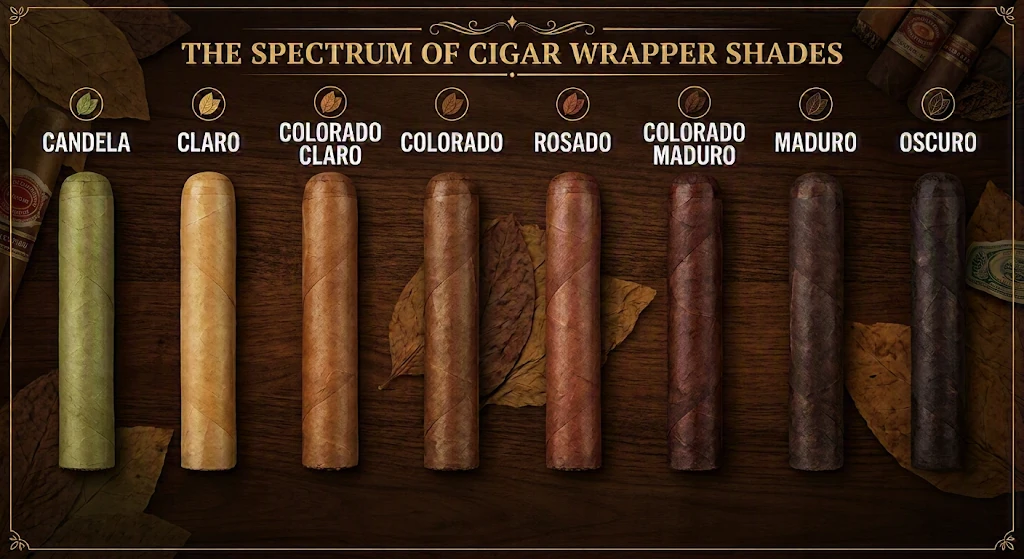
Line up eight cigars from lightest to darkest and you're looking at one of the most misread scales in the cigar world. The names sound like paint chips, but the shade of a wrapper is really a record of decisions: when the leaf was picked, whether it grew under cloth or open sky, how much heat it saw and how fast, and — above all — how long and how hard it was fermented. Two leaves off the very same plant can finish three shades apart depending on what happens after harvest. What follows is a walk down that spectrum, with how each shade is made, the tobaccos that wear it best, and a cigar to try for every one.
Candela
Pale green · the green sheep of the family
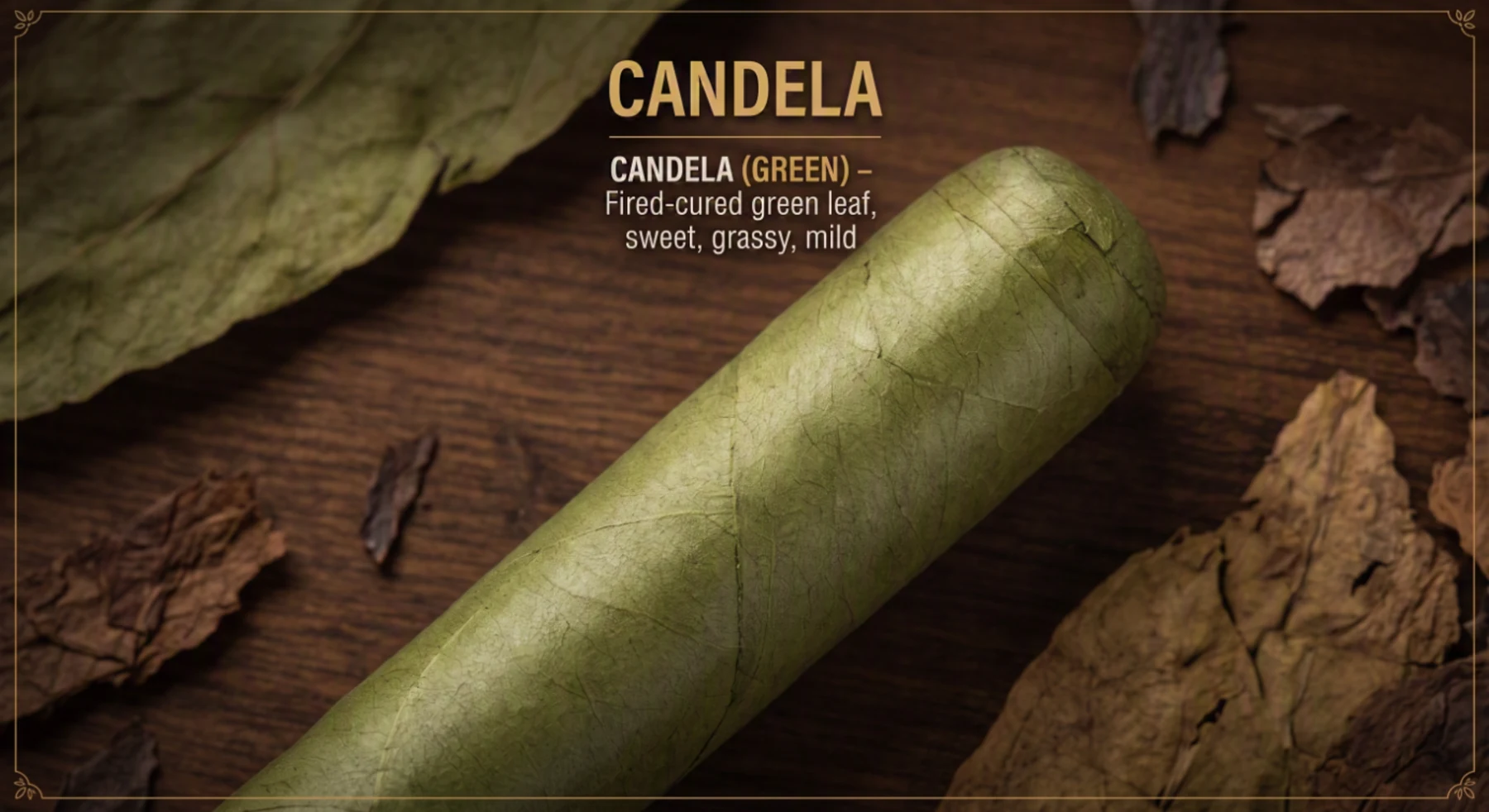
Candela earns its color by breaking every rule the others follow. Where most wrapper leaf is picked ripe and cured slowly over weeks, candela is harvested young — before the leaf fully matures — then rushed through a fast, high-heat curing (sometimes called flash curing) that spikes the barn temperature quickly. The goal is to lock the chlorophyll in rather than let it break down. Normal curing turns a leaf brown as its green pigment degrades; candela's heat sets the green before it can go anywhere. Because the process is quick and the leaf is young, there's very little fermentation — days and a burst of heat, not months in a pilón.
The flavor follows the method: light, grassy, faintly sweet and tea-like, with almost none of the pepper or earth of darker leaf. Connecticut-seed tobacco grown in the U.S. and Central America is the classic candela source. It ruled the mid-century American market, nearly went extinct, and now survives as a specialty and a summer favorite.
Foundation Cigar Co. The Upsetters → — Nick Melillo, a candela evangelist, wraps the Para El Sapo vitola of this Jamaican-inspired line in a bright candela leaf. A modern, well-made ambassador for a shade most factories won't touch.
Claro
Pale golden tan · the classic mild wrapper
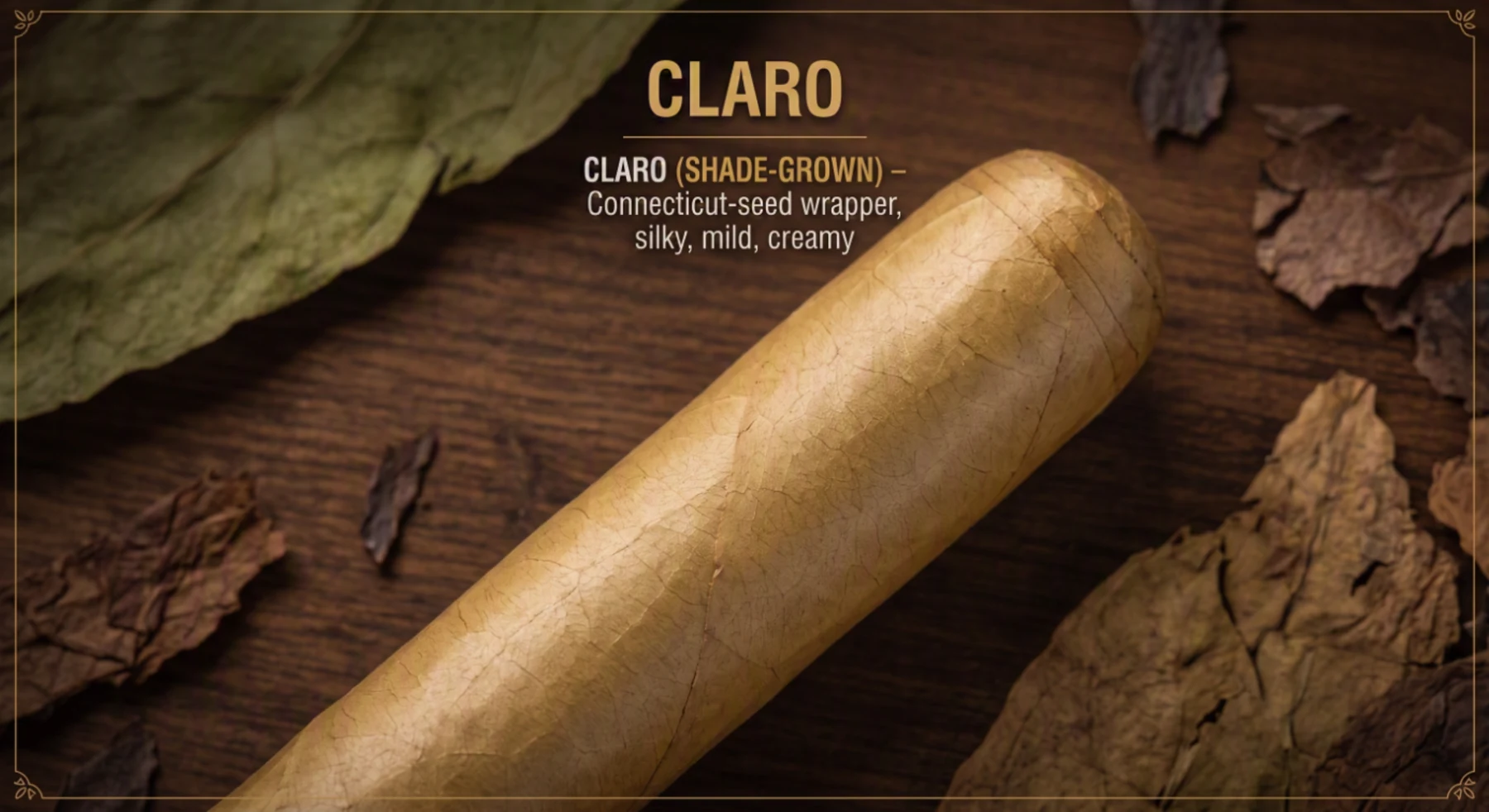
One notch darker, the green gives way to a soft, pale tan — the color most people picture when they imagine a mild cigar. Claro is the product of shade-growing and gentle handling. The tobacco is grown under cheesecloth tents that filter the sun, which keeps the leaf thin, smooth, and light in color and holds down the oils and pigment it develops. Claro wrapper often comes from the lower primings of the plant, where leaves are mildest, and it gets only a light fermentation — enough to cure and settle the leaf without darkening it or driving out its delicate character.
The result is the quintessential breakfast cigar: creamy, mild, lightly sweet, with cedar and a touch of hay. Connecticut Shade is the archetype — grown in the Connecticut River Valley, and now widely in Ecuador under naturally cloudy skies — and it built the reputation of the smooth, approachable smoke.
Dunbarton Sobremesa Brûlée Wagashi → — Steve Saka's shade-grown blend under a silky Ecuadorian Connecticut wrapper. A pale, creamy, dessert-sweet claro (the name nods to a Japanese confection) that shows exactly what a well-made light wrapper can do.
Colorado Claro
Light reddish tan · the warm middle begins
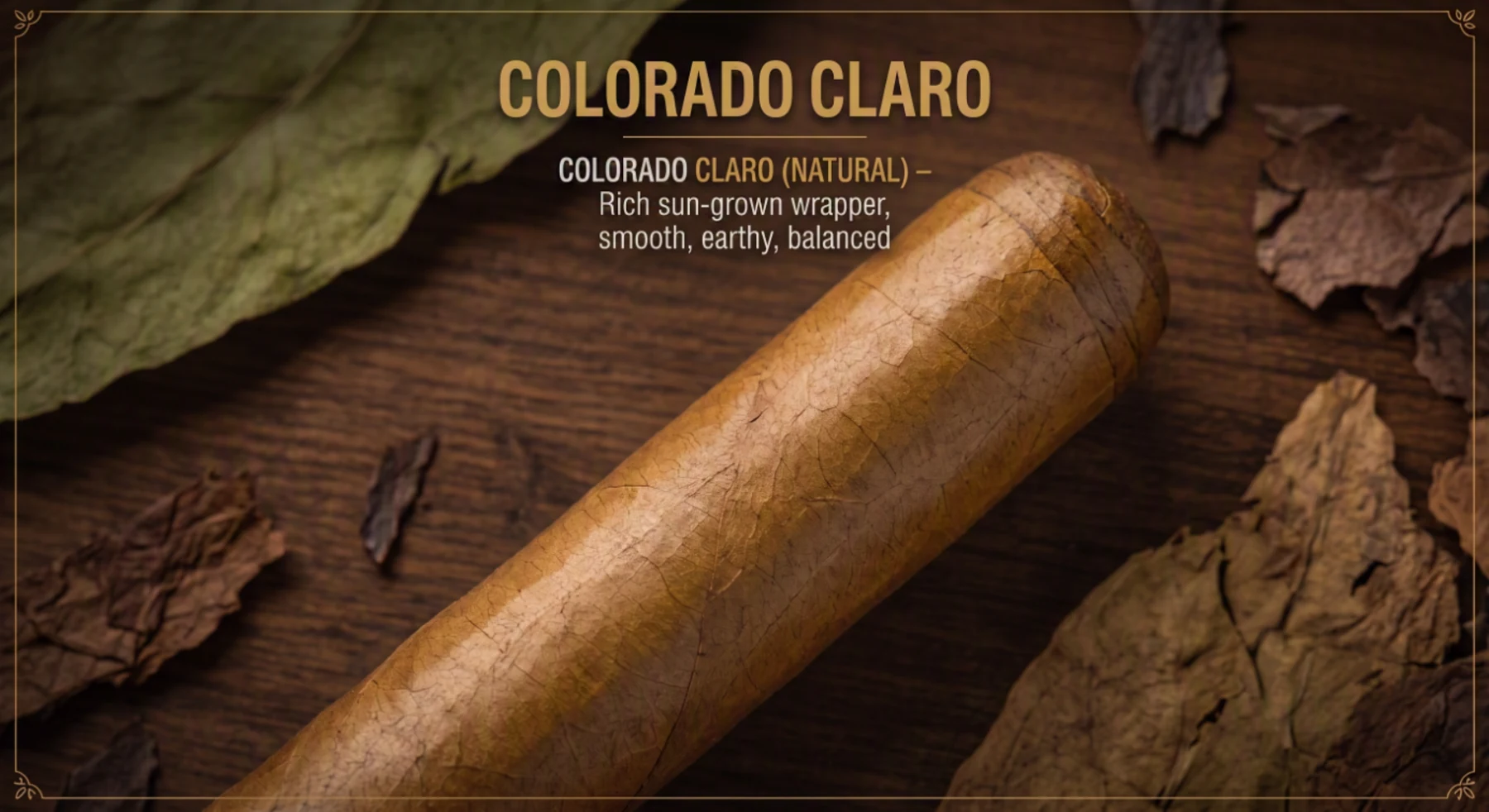
Now the browns start picking up warmth. Colorado Claro sits between claro and full colorado — a light-to-medium tan with a distinct reddish, tawny cast. It comes from a little more sun, slightly higher primings, and a more attentive fermentation than a pale claro gets: enough to build color and body without tipping into deep mahogany. The leaf tends to be a touch more toothy and oily than a claro, hinting at the richer fermentation behind it.
Expect a step up in depth: toasted nuts, light cedar, gentle spice, and a soft sweetness, still comfortably medium-bodied. The shade is famously tied to Cameroon tobacco — grown in West Africa and, from Cameroon seed, in Ecuador — known for its reddish, slightly bumpy leaf and a signature sweet-spice note that's hard to reproduce anywhere else.
Plasencia Alma Fuerte Colorado Claro → — proof the shade isn't Cameroon's alone: a Nicaraguan puro from the Plasencia family finished with an extensively aged Colorado Claro wrapper. Reddish-tan and refined, with toasted nuts, cedar, sweet spice, and cocoa.
Colorado
Rich red-brown · polished mahogany
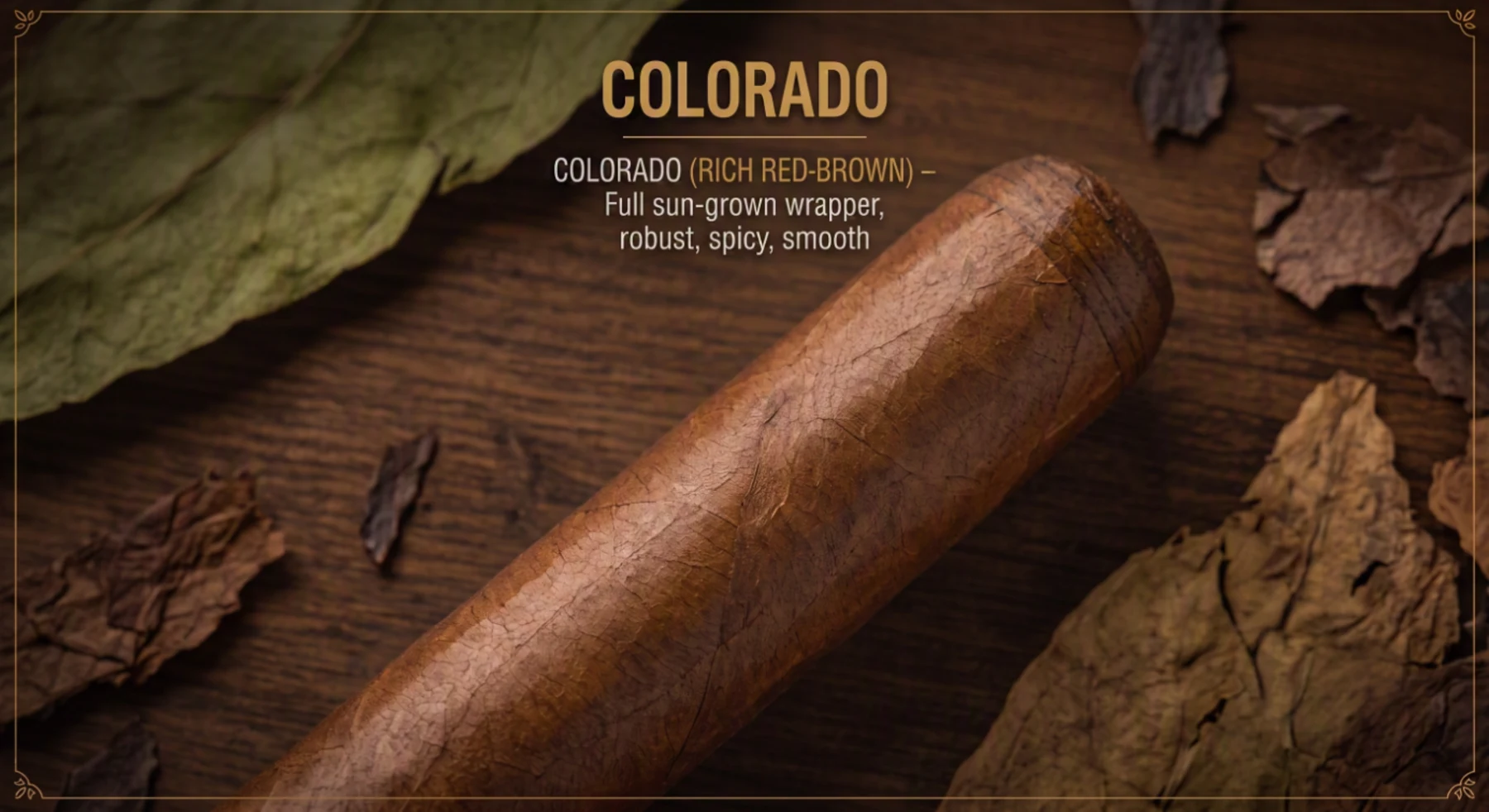
At full Colorado the leaf reaches a rich, polished reddish-brown — think mahogany or chestnut. This is the heartland of the sun-grown wrapper. Where claro hides under cloth, colorado leaf is often grown in open sun, which thickens it and drives up its oils and pigments, and it's fermented moderately — longer and warmer than the lighter shades, but well short of a maduro's marathon. The extra sun and fermentation give the leaf its depth of color and glossy sheen.
The payoff is a medium-to-full cigar with real dimension: cedar and nuts joined by earth, a gentle peppery finish, and a sweetness-and-spice interplay that keeps it interesting. Cuban-seed Habano tobacco grown in Nicaragua, Honduras, and Ecuador is the modern engine of the colorado shade — arguably the most popular wrapper style in the fuller half of the market today.
Oliva Serie V → — its Nicaraguan Habano sun-grown wrapper is a benchmark colorado: rich reddish-brown, oily, delivering the toasty, sweet-spicy, medium-full profile the shade is known for.
Rosado
Distinctive rosy red-hue · the connoisseur's leaf
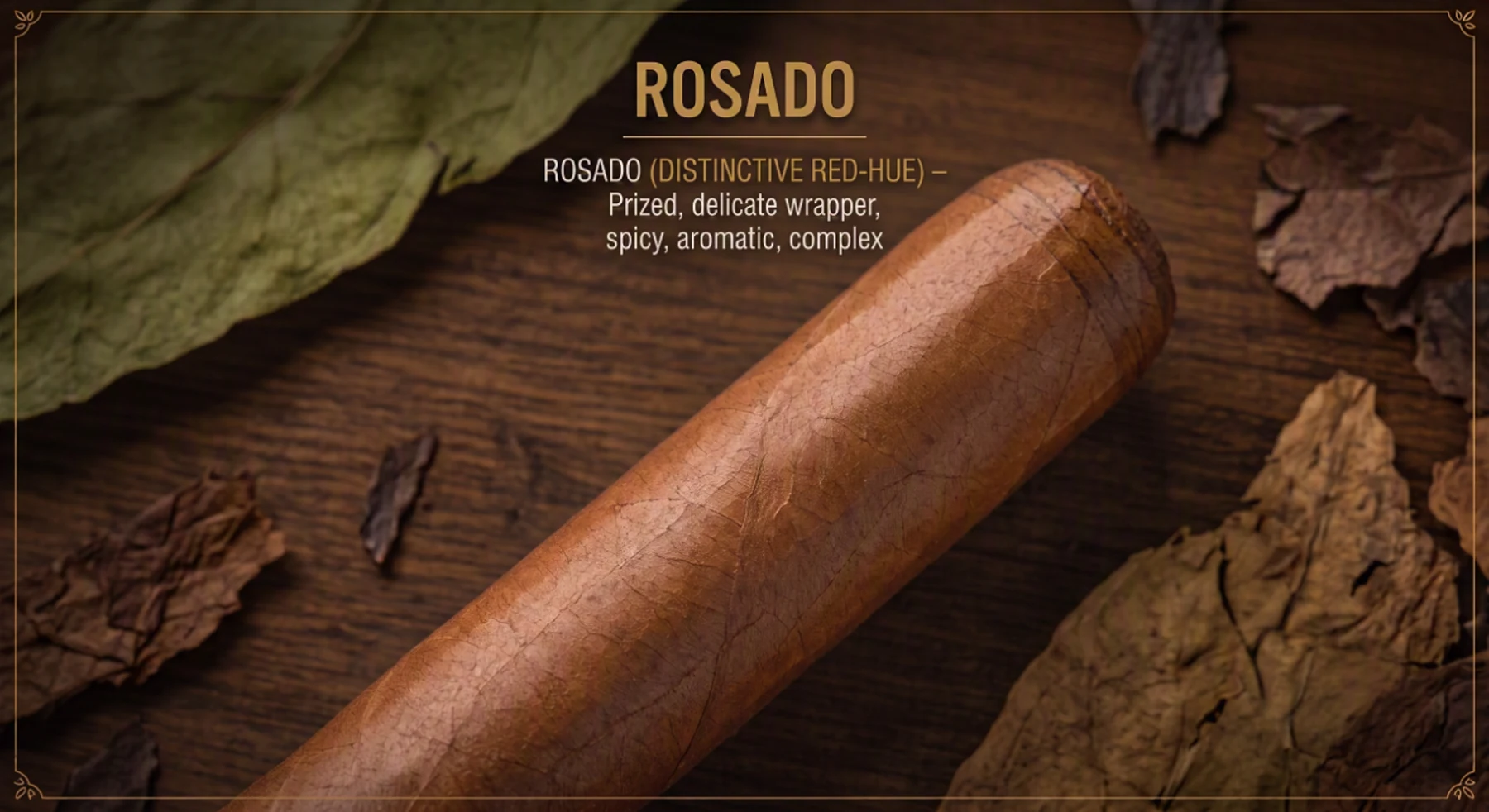
Rosado is defined as much by pedigree as by color. The word means "rosy," and a true rosado shows a lustrous reddish-brown with an almost pinkish, oily-mahogany glow when the light catches it. Crucially, rosado traditionally refers to leaf grown from Cuban seed — it's a heritage designation, not merely a spot on the color chart. Producing it takes prime sun-grown leaf and a careful, well-judged fermentation that coaxes out that reddish oiliness and sheen without darkening into ordinary colorado or maduro. It's a hard look to hit consistently, which is part of why rosado carries a certain prestige.
On the palate it tends toward full and complex: roasted coffee, cedar, baking spice, leather, pepper, and a signature sweet finish. Ecuadorian-grown Habano from Cuban seed is the go-to source today.
Angel Cuesta Rosado, J.C. Newman → — named for the founder of Cuesta-Rey and rolled at J.C. Newman's historic El Reloj factory in Tampa. Its Ecuador Havana Rosado wrapper is a textbook example of the shade: lustrous, reddish, and medium-bodied, with cedar, coffee, and sweet spice.
Colorado Maduro
Rich, red-toned dark brown · where red meets dark
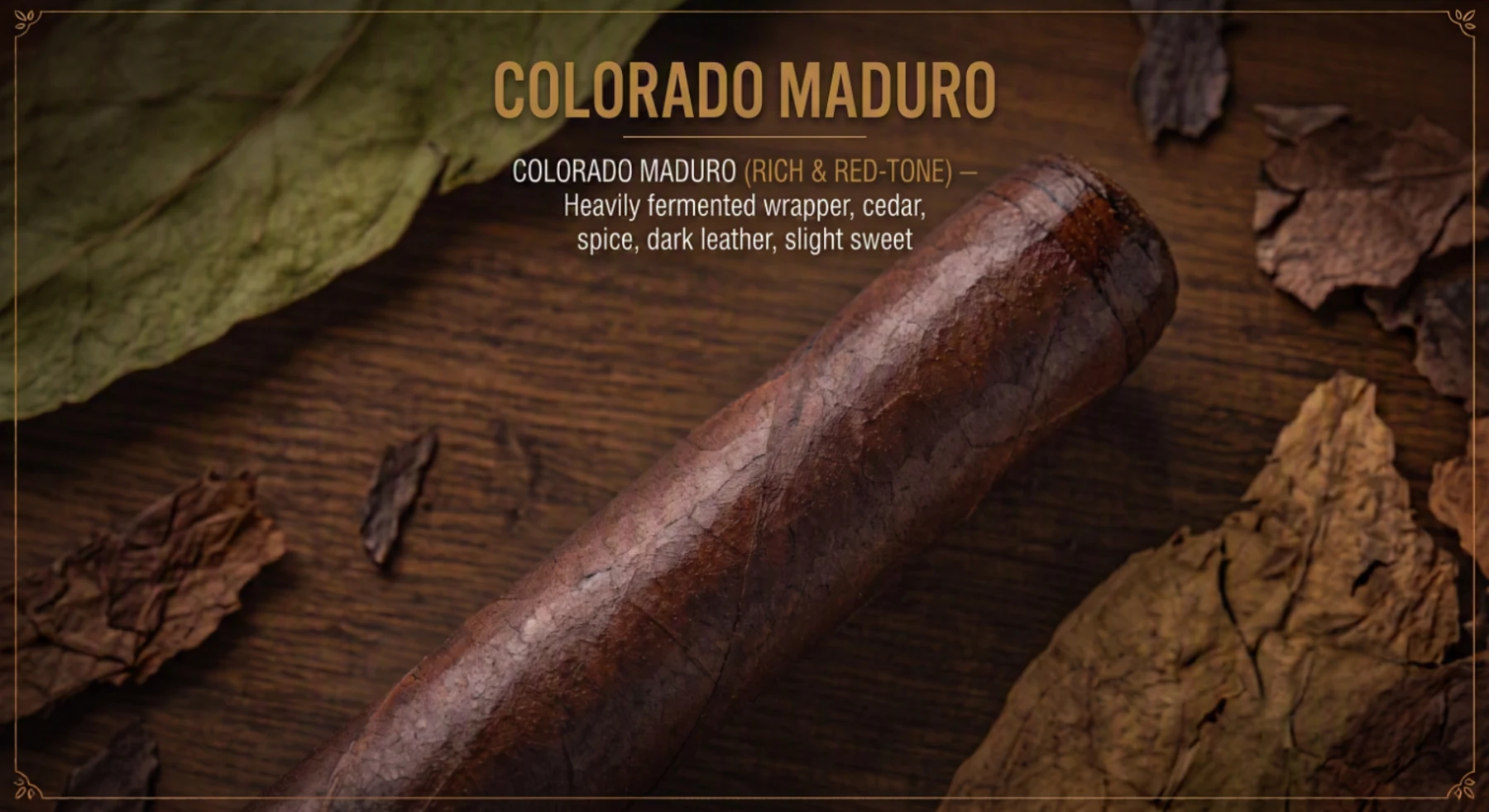
As the name signals, Colorado Maduro is where the red-brown of colorado meets the darkness of maduro — a deep, oily brown with warm reddish undertones. Getting there means a longer, warmer fermentation than a straight colorado: enough extra time in the pilón to break down more of the leaf, deepen the color, and begin converting starches into the natural sugars darker wrappers are prized for — while still keeping some reddish colorado character rather than going fully black.
The flavor lands in a satisfying middle ground: fuller-bodied, with dark chocolate, roasted coffee, earth, and sweet spice, plus a gentle natural sweetness. Ecuadorian and Nicaraguan sun-grown leaf, given extra fermentation, is a common source, and many wrappers marketed as bold-but-balanced "sun grown" live right here.
Ashton VSG (Virgin Sun Grown) → — its Ecuadorian sun-grown wrapper, aged extensively before use, is a classic colorado maduro: dark, oily, and reddish, with a rich cocoa-and-spice depth that's fuller than a colorado but shy of a true maduro.
Maduro
Deep, rich chocolate brown · ripened by fermentation
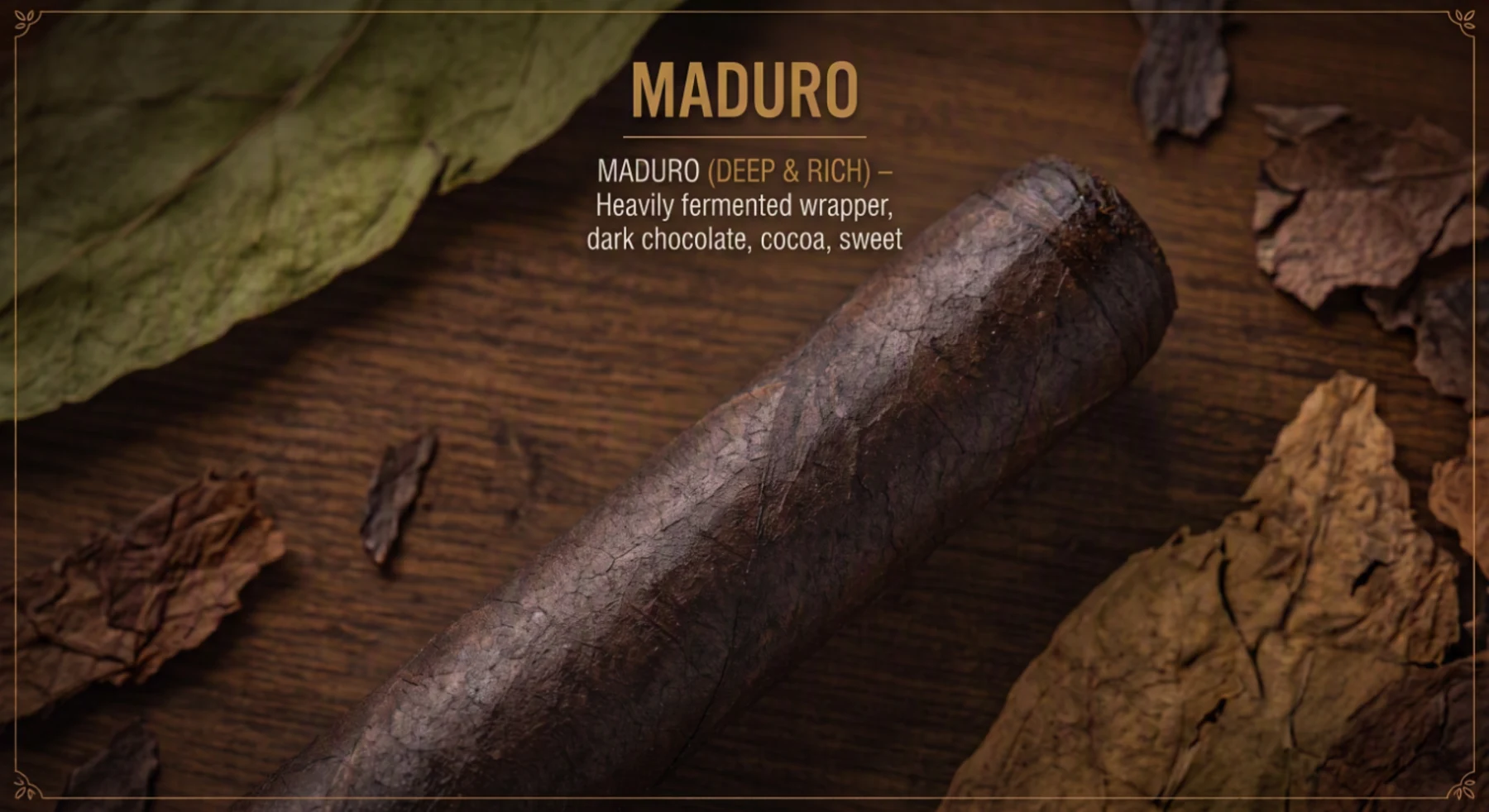
Maduro — Spanish for "ripe" — is less a variety of tobacco than a process, and that's the key to it. Almost any suitable leaf can be taken to maduro; what makes it maduro is an extended, hotter fermentation. The leaves are stacked in large piles (pilones), where weight, moisture, and internal heat drive a long "sweat" that can run for months and, for the darkest results, through cycles that stretch toward a year or more. This prolonged cooking breaks down the chlorophyll completely, darkens the leaf to deep chocolate brown, and pulls the natural plant sugars to the surface — which is why maduros so often read as sweet.
The classic profile is exactly what that process suggests: dark chocolate, espresso, molasses, dried fruit, and a backbone of black pepper and earth. Thick, sugar-rich leaves take the process best, which is why Connecticut Broadleaf and Mexican San Andrés are the two great maduro workhorses — hardy enough to survive the long fermentation and to sweeten beautifully.
Padrón 1926 Serie (Maduro) → — Padrón's Nicaraguan-grown maduro is one of the most decorated dark cigars ever made: deep brown, faintly oily, layered with cocoa, coffee, and sweet spice.
Oscuro
Deep black-brown · the darkest leaf on the rack
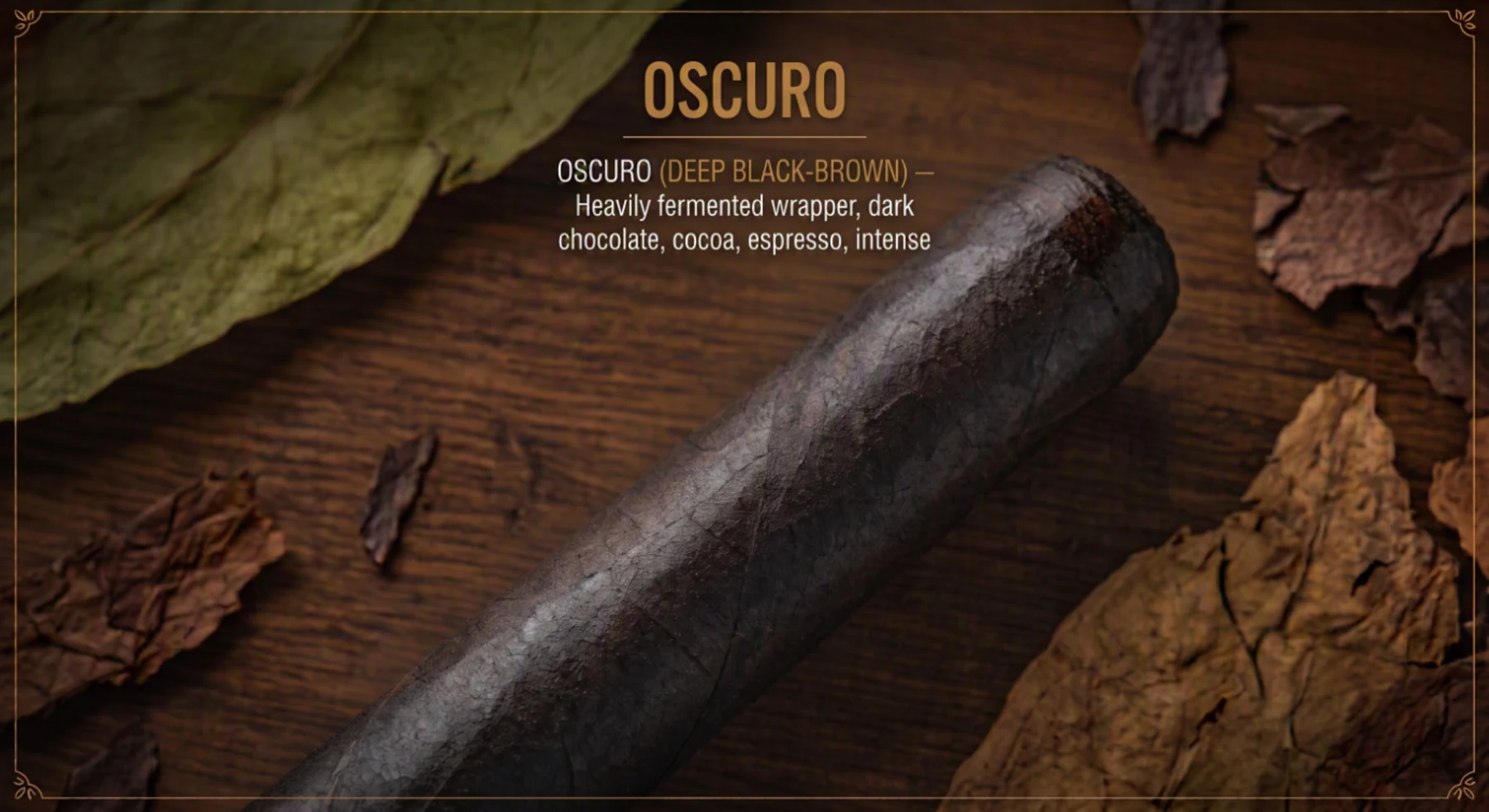
At the far end sits Oscuro — "dark" — the blackest, oiliest leaf on the rack, so deeply colored it can look nearly black or carry a purplish sheen. Oscuro is essentially maduro taken to the extreme: fermented longest and hottest of all, and often left on the plant to fully ripen and darken before harvest, then pushed through the most prolonged fermentation and aging of any shade. It typically comes from the highest primings — the top leaves that get the most sun — which are the thickest and most robust, and the only ones sturdy enough to endure that treatment without falling apart.
Because so much has been driven out and transformed, oscuro can be intense: charred wood, dark cocoa, black pepper, and a concentrated, almost syrupy sweetness. It's slow, deliberate leaf to make and comparatively rare. Broadleaf and San Andrés again do much of the work, often stalk-cut and aged for years.
Liga Privada No. 9 → — Drew Estate's dark, oily Connecticut Broadleaf is one of the most sought-after near-black wrappers in the modern market, loaded with cocoa, pepper, and earth. For an even more explicit example, Camacho Triple Maduro → uses maduro leaf for wrapper, binder, and filler.
A closing word: this spectrum is a continuum, and makers don't always agree on where one shade ends and the next begins — one company's colorado maduro is another's maduro. Use the names as a map of intent, taste widely across the range, and let your own palate draw the borders.
Found a shade you want to smoke?
Every cigar above links to a live StogieSpy price comparison — the best landed price per stick across premium online retailers. Hunt down your shade and skip overpaying.
Compare cigar prices →